North Texas gives riders a long season. And one in seven reasons to armor the policy.
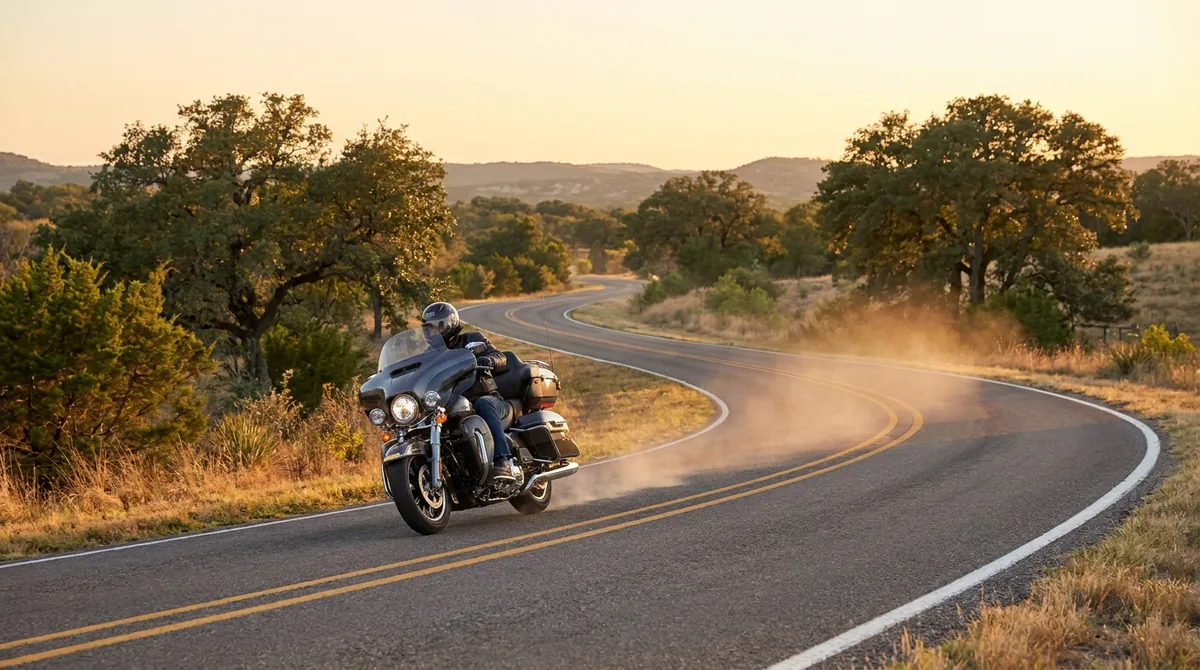
Start with what makes riding here good: the season barely closes. Mild winter afternoons on the farm roads south of Mansfield and Midlothian, spring weekends chasing Hill Country sweepers, summer evening loops once the heat breaks. A handful of ice days is about all that parks a North Texas bike. More months on the road means more miles, and more miles mean the policy is not a formality — it is equipment, as real as the helmet.
Now the part that shapes every recommendation on this page. Roughly one in seven Texas drivers carries no insurance at all, and plenty more carry the bare 30/60/25 minimum. In a car, that is an annoyance. On a bike, you are the crumple zone, and the driver who turned left in front of you being uninsured turns a bad day into a financial one. That is why uninsured/underinsured motorist coverage is the first thing we size on a rider policy, matched to real limits, with the written-rejection form left unsigned.
Texas also runs its rider rules differently than some other states. Lane splitting is not legal here — however tempting stopped I-30 traffic looks at rush hour — and doing it before a crash costs you twice: the ticket, and a fault argument against your recovery. The helmet is mandatory under 21; at 21 and over, Texas lets you ride without one only if you have completed an approved safety course or carry qualifying health coverage — and either way, the helmet quietly protects your injury claim as well as your head.
The rest is making the policy match the bike you actually ride: custom parts coverage above the tiny default, safety apparel for the gear, guest passenger liability if anyone rides with you, and comprehensive against the two North Texas constants — theft and hail, the kind of spring storm that can total a bike parked outside. One call to our Arlington office, bundled with the car and the house, and it is often cheaper than riders expect.